Best Junk Removal Trucks 2026: New vs Used Buying Guide
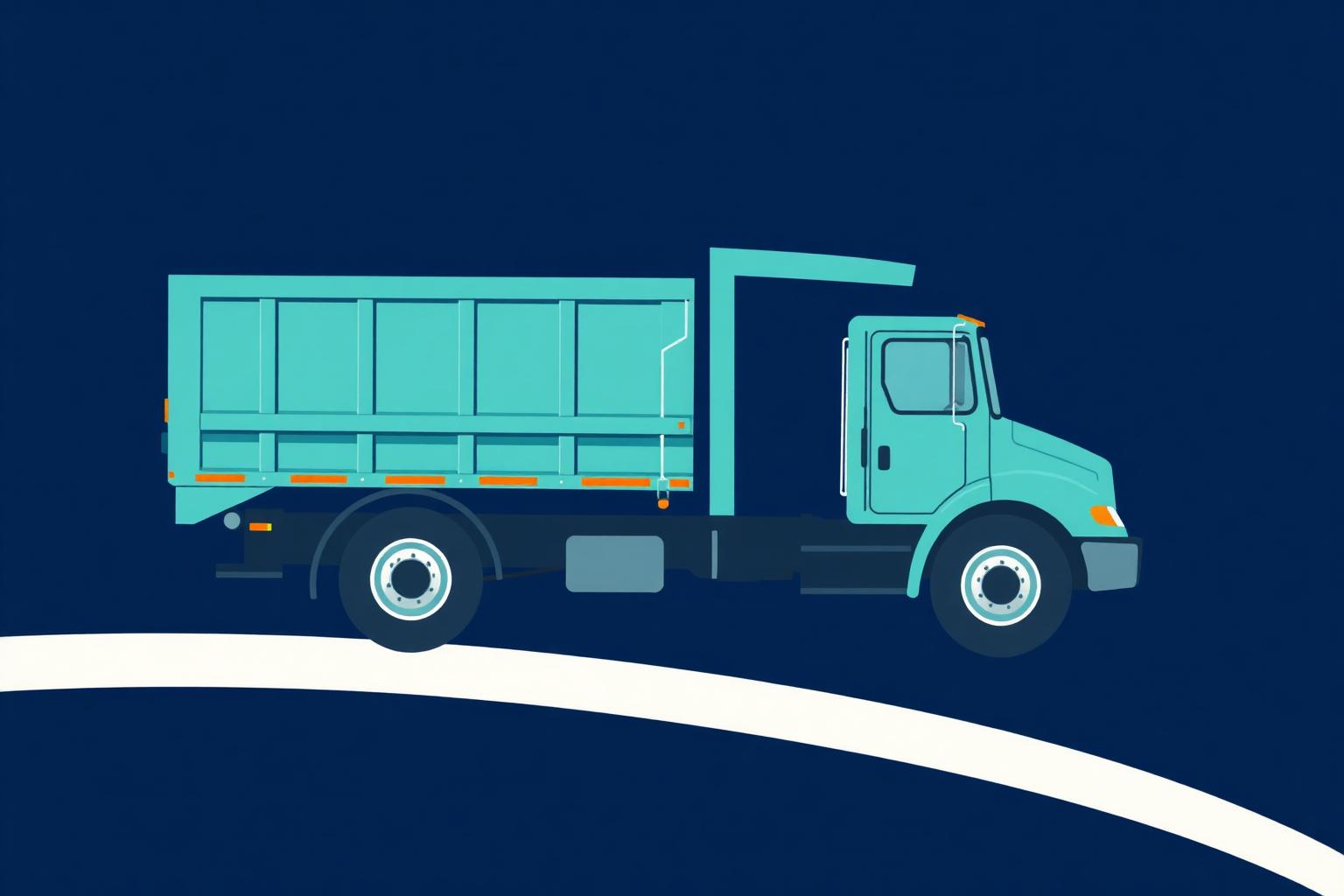
The best junk removal truck is the one that pays itself off the fastest while costing you the least in dump fees, downtime, and back injuries. For most operators in 2026 that's a used 14–17 yard dump-body — not a new $90K rig, not a borrowed pickup with a trailer. This is the truck-buying playbook we give every new operator we work with.
Pick the wrong truck and you'll cap revenue at $180K with a back problem by year three. Pick the right one and you'll clear $250K in year one with room for a second crew by month nine.
The 3 realistic truck options for a new operator
- Used box truck + manual unload ($8K–$22K).Cheapest entry. 16–26 ft box, you and a helper unload by hand at the transfer station. Works for the first 60 jobs while you build cash flow. Brutal on your back past month four.
- Used dump-body truck (14–20 yard, $28K–$55K).The sweet spot. Hydraulic dump, 1–2 minute unload, fits in residential driveways. Pays for itself in 6–10 months on a $250K/year route. This is what 80% of profitable single-truck operators run.
- New dump-body truck (16–18 yard, $85K–$115K).Warranty, financing terms, and a clean look — but you're paying $35K+ premium to avoid a PPI. Only makes sense once you're running 3+ trucks and depreciation is a tax strategy.
New vs used: the actual math
A $95K new dump truck financed at 9% over 5 years costs ~$1,975/mo plus insurance. A $42K used dump truck financed at 11% over 4 years costs ~$1,085/mo. On a route doing $22K/mo gross, that $890/mo gap is the difference between a 22% net and a 17% net. Year one, that's $10,680 in your pocket from one decision.
The objection: "But used trucks break down." True — and the $10,680 you saved covers a complete hydraulic rebuild ($3,500–$6,000), a new clutch ($2,200), and still leaves $2,000–$5,000 for surprises. Run a $400 pre-purchase inspection on every used truck before you sign. Walk away from any truck with frame rust, blown head gasket history, or a non-functioning PTO.
Dump-body styles ranked for junk removal
| Style | Capacity | Best for |
|---|---|---|
| Walk-in dump body | 14–17 yd | Residential cleanouts — best all-around |
| Standard dump body | 12–16 yd | Construction debris, heavy loads |
| Roll-off / hook lift | 15–30 yd | Mixed cleanout + dumpster rental model |
| Box truck (no dump) | 16–26 ft | Bootstrap mode only — manual unload |
| Pickup + trailer | 6–10 yd | Side hustle / weekend testing only |
The walk-in dump-body wins because you can step into the bed through the rear gate, place items by hand instead of throwing them over a 4-foot wall, and pack 25% more in by stacking properly. Standard dump bodies are cheaper but you'll wear your shoulders out within a year.
What size truck should you buy?
For 95% of new operators: a 14–17 yard dump body. Here's why:
- Under 14 yd: you'll do too many 2-trip jobs and burn margin on extra dump runs.
- 14–17 yd: matches the standard truck-percentage pricing model (1/4, 1/2, 3/4, full) and fits in residential driveways and tight HOA streets.
- 18–20 yd: more capacity but harder to maneuver on tight residential, and you'll routinely hit dump weight limits before you fill the volume.
- Over 20 yd (roll-off): only if you're combining junk removal with a dumpster-rental business model.
Buy or lease?
Buy used, finance through a community bank or local credit union, not the dealer. Local banks routinely beat dealer financing by 2–4 points on commercial vehicles. Avoid leasing entirely — mileage caps and "excess wear" charges on a truck used for junk removal will destroy you at lease-end.
The only exception: a sale-leaseback on a new truck once you're operating 4+ trucks and want a known monthly cost for a 36-month operating budget. That's a CFO decision, not a startup decision.
Where to actually find junk removal trucks for sale
- Commercial Truck Trader and TruckPaper. Largest inventory of used dump bodies. Filter by GVWR (you want 19,500–26,000 lb) and avoid anything over 200,000 miles unless the engine was rebuilt with documentation.
- Ritchie Bros and IronPlanet auctions. Municipal fleet retirements show up here — DOT-maintained trucks with full service records, often 30–40% under retail. Get a PPI before bidding.
- Facebook Marketplace and Craigslist. 30% of the listings are scams or rust buckets, but the other 70% includes desperate operators dumping near-new equipment for cash.
- Reaching out to local landscapers and contractors.They upgrade fleet every 4–6 years. Cold-call the top 20 in your metro and ask if they have anything coming out of rotation.
The 12-point pre-purchase inspection (non-negotiable)
Hire a diesel mechanic for $400–$600 to run a full PPI before any used purchase. They check:
- Frame integrity — rust, cracks, prior welds, alignment
- Engine compression test on each cylinder
- Transmission and clutch wear
- PTO engagement and hydraulic pump pressure
- Dump cylinder seals and bed pivot points
- Brake pad and rotor measurements
- Exhaust system (especially DPF on 2010+ diesels)
- Cooling system pressure test
- Differential and axle play
- Suspension and air-bag system
- Electrical and battery load test
- DOT inspection sticker validity
A $500 PPI that uncovers a $4,200 DPF replacement before you sign is the highest-ROI inspection in this business.
What a junk removal truck actually costs to run
Budget for a 14–17 yard dump-body running 18–22 jobs/week:
- Fuel: $850–$1,400/mo
- Insurance (commercial auto + cargo): $325–$525/mo
- Maintenance reserve: $400/mo
- Registration, DOT, IFTA: $80–$150/mo
- Tires (set every 18–24 months): $145/mo amortized
- Dump fees: $1,200–$2,800/mo (varies by metro)
Total truck operating cost runs $3,000–$5,400/mo before financing and labor. Build this into your pricing — see our junk removal pricing guide for the truck-percentage tiers that account for this.
When to add truck #2
Add a second truck when you're (a) turning away 10+ jobs/week because your one truck is booked solid 8+ days out, (b) the first truck is consistently grossing $24K+/mo, and (c) you have 90+ days of cash to cover the second truck while it ramps. Adding truck #2 before all three are true is the most common reason operators go from profitable to bankrupt in 18 months.
For the full launch roadmap — LLC, insurance, dump accounts, and the first 10 jobs — see how to start a junk removal business.
The bottom line
Don't buy a $95K new truck because it looks legit on Instagram. Buy a $38K used 16-yard walk-in dump body with a clean PPI, finance it through your local credit union, and run it hard while you stack reviews and build cash. The truck makes you money — the marketing keeps the truck full.
Ready to start?
Got the truck — need the booked jobs?
Send us your service area, average ticket, and current ad spend. We’ll discuss covering your Google Search campaigns and Local Services Ads — plus a 90-day plan to keep that truck booked solid. Flat monthly plans, month-to-month.
Choose your plan →Sources
Frequently asked questions
- What is the best truck for a junk removal business in 2026?
- For 95% of new operators, a used 14–17 yard walk-in dump-body truck in the $28K–$55K range. It fits residential driveways, matches the standard truck-percentage pricing model (1/4, 1/2, 3/4, full), and pays itself off in 6–10 months on a $250K/year route. Skip new ($85K–$115K) until you're running 3+ trucks and depreciation is a tax strategy. Skip pickup-and-trailer past the side-hustle stage — you'll cap revenue and wreck your back.
- Should I buy a new or used junk removal truck?
- Used, almost always. A $95K new dump truck financed at 9% over 5 years runs ~$1,975/mo. A $42K used dump truck financed at 11% over 4 years runs ~$1,085/mo. That $890/mo difference is roughly $10,680/year in your pocket — enough to cover a full hydraulic rebuild and a clutch if something breaks, with cash left over. Just run a $400–$600 pre-purchase inspection on every used truck before signing and walk away from frame rust, blown head gasket history, or non-functioning PTO.
- What size truck do I need for junk removal?
- 14–17 yards is the sweet spot. Under 14 yd and you'll do too many 2-trip jobs and burn margin on extra dump runs. 18–20 yd is harder to maneuver in tight residential and routinely hits dump weight limits before filling the volume. Over 20 yd (roll-off / hook-lift) only makes sense if you're combining junk removal with a dumpster-rental business model.
- Where can I buy a junk removal truck?
- Four sources, ranked: (1) Commercial Truck Trader and TruckPaper — largest used dump-body inventory, filter for 19,500–26,000 lb GVWR and under 200K miles. (2) Ritchie Bros and IronPlanet auctions — DOT-maintained municipal fleet retirements at 30–40% under retail. (3) Facebook Marketplace and Craigslist — 70% of listings are real and some are desperate-seller deals. (4) Cold-call local landscapers and contractors who upgrade fleet every 4–6 years. Always run a $400–$600 PPI before any used purchase.
- How much does it cost to run a junk removal truck per month?
- For a 14–17 yard dump-body doing 18–22 jobs/week: fuel $850–$1,400, commercial auto + cargo insurance $325–$525, maintenance reserve $400, registration/DOT/IFTA $80–$150, tires amortized $145, dump fees $1,200–$2,800 (varies by metro). Total operating cost runs $3,000–$5,400/mo before financing and labor. Build this into your truck-percentage pricing so every job covers true cost plus margin — not just the visible fuel and dump fees.
Keep reading
How to Start a Junk Removal Business in 2026: $0 to $250K Roadmap
The full 2026 launch playbook: truck choice, LLC + insurance, dump accounts, first 10 jobs, pricing, and the month-by-month roadmap to $250K in year one.
How to Price Junk Removal Jobs: The 2026 Operator Pricing Playbook
Truck-percentage pricing tiers, minimums, surcharges, and upsell scripts the highest-margin junk removal operators use in 2026.
How to Get Commercial Junk Removal Contracts (2026 Playbook)
The operator's playbook for landing commercial junk removal contracts in 2026 — the 6 customer types worth chasing, paperwork requirements, the 5-touch outbound sequence, and pricing structures.